Stainless Steel in CNC Machining
What is Stainless Steel?
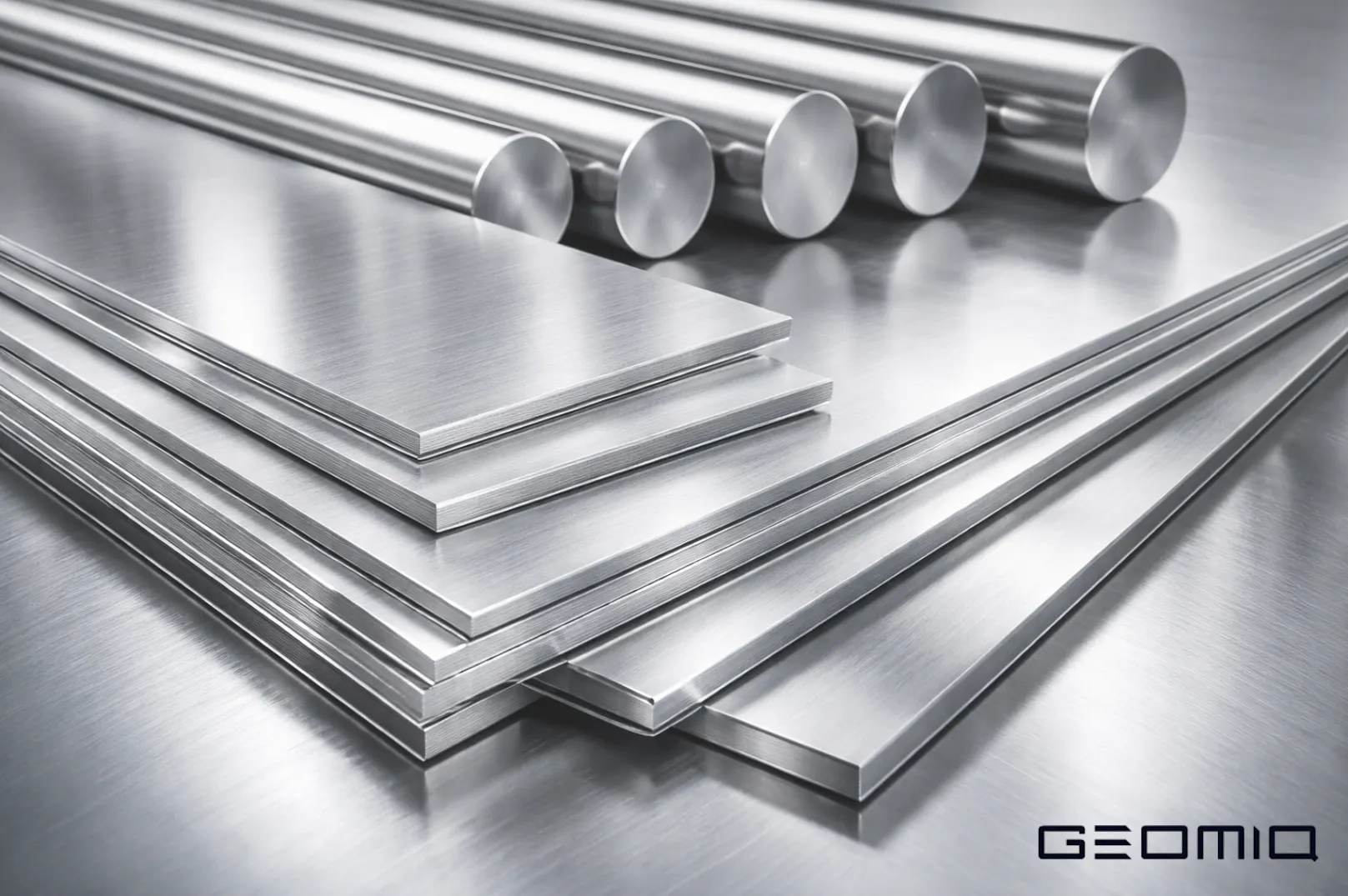
Stainless steel is a strong, corrosion-resistant material made mostly of iron, carbon, and chromium. Its ability to resist rust and staining makes it an excellent choice for many different uses, especially in CNC machining. When it comes to CNC machining, stainless steel is popular because it's tough, durable, and can handle high heat and wear. It’s commonly used in industries like aerospace, automotive, and medical devices, where parts need to be precise and reliable.
Stainless Steel Machining Applications
Stainless steel is a popular material in CNC machining and rapid prototyping because it is strong, durable, and easy to shape precisely. It is used in many industries for parts that need reliability and long-lasting performance.
Aerospace Components
Stainless steel is key in aerospace, used to make strong yet lightweight parts like turbines and engine components that can withstand high heat and pressure.
Medical Devices
Stainless steel’s resistance to rust and its compatibility with the human body make it perfect for creating precise surgical tools and implants.
Automotive Parts
In cars, stainless steel is used for parts like exhaust systems and engine components because of its strength and long-lasting durability.
Industrial Equipment
Stainless steel is essential in industrial machinery, valves, and pumps, especially in tough environments where chemicals or high pressure are involved.
Food Processing Equipment
Because it’s easy to clean and resists corrosion, stainless steel is the go-to material for food processing equipment, helping to meet hygiene standards.
Consumer Products
Stainless steel is used in everyday products like kitchen appliances and jewelry, combining a sleek look with the durability to last.
Key Takeaways
- Stainless steel comes in different types, each with unique properties like strength and corrosion resistance. Knowing these properties helps you choose the right material for CNC machining.
- Stainless steel is used in industries like aerospace, healthcare, automotive, and manufacturing for parts that need strength, durability, and resistance to corrosion.
- Machinability varies by stainless steel type, with some being easier to machine. Choosing the right type affects production speed and precision.
- The surface finish of stainless steel plays a significant role in its performance and appearance. Common finishes like polishing, passivation, and bead blasting are often used to enhance corrosion resistance and meet specific industry needs.
- The cost of stainless steel varies depending on the grade and its specific properties. Understanding the trade-offs between machinability, corrosion resistance, and cost helps in selecting the best material for your application.
Comparison of Stainless Steel Types for CNC Machining
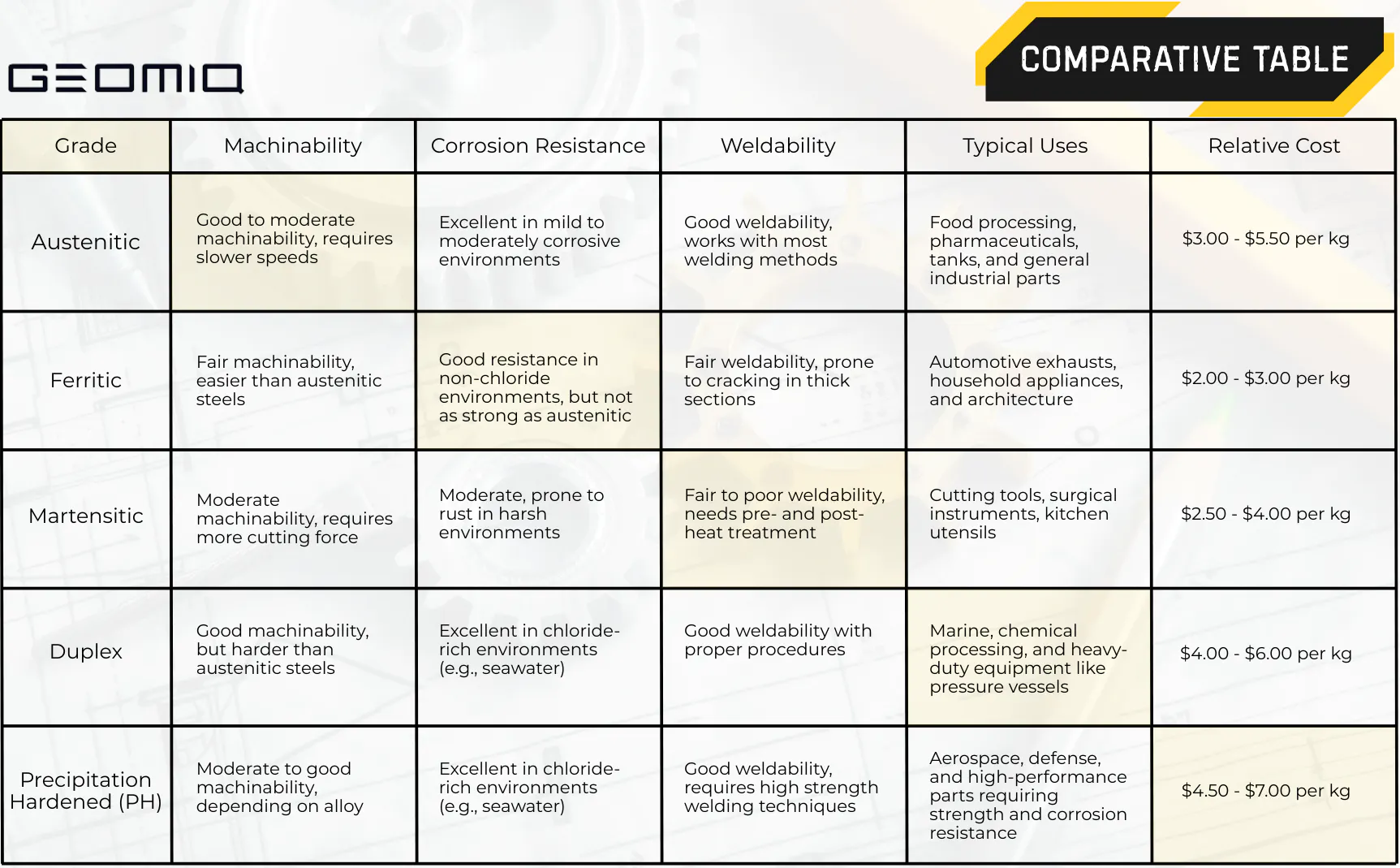
In CNC machining, choosing the right type of stainless steel is crucial for achieving the desired performance and durability. Each type of stainless steel has its own unique properties, such as machinability, corrosion resistance, and weldability, making them suitable for different applications.
The table below provides a clear comparison of the main types of stainless steel, helping you make an informed decision based on your project’s needs.
Types of Stainless Steel
Austenitic steel
Stainless Steel 303 - Austenitic
Stainless Steel 303 is easy to machine and offers good resistance to corrosion. It's commonly used in industries like automotive and aerospace for parts like fasteners and components that need to be quickly and easily machined.

Stainless Steel 304 - Austenitic
Stainless Steel 304 is versatile and resistant to rust, making it perfect for many different applications. It’s widely used in industries like food processing, chemicals, and pharmaceuticals for equipment like tanks and storage containers.

Stainless Steel 304L - Austenitic
Stainless Steel 304L has less carbon than 304, which makes it more resistant to corrosion from welding. It’s often used in projects that require welding, such as pipes and tanks in the food and chemical industries.

Stainless Steel 316 - Austenitic
Stainless Steel 316 is very resistant to rust, especially in salty or corrosive environments. It's commonly used in marine, medical, and chemical industries for equipment that needs to stand up to harsh conditions.

Stainless Steel 316L - Austenitic
Stainless Steel 316L is similar to 316 but has less carbon, which improves its resistance to corrosion after welding. It’s used in the medical, food processing, and pharmaceutical industries for parts that need to be strong and resistant to rust.

Stainless Steel 18-8 - Austenitic
Stainless Steel 18-8, also known as 304 stainless steel, is popular for its strong resistance to corrosion and oxidation. It’s commonly found in the food and beverage, pharmaceutical, and chemical industries, where it's used for tanks, pipes, and other equipment that need to resist rust and wear.

Martensitic steel
Stainless Steel 416 - Martensitic
Stainless Steel 416 is a type of stainless steel that’s easy to machine, though it offers only moderate corrosion resistance. It’s often used in the automotive and tooling industries for parts like gears and shafts that require precise manufacturing.

Stainless Steel 420 - Martensitic
Stainless Steel 420 is a hard, martensitic steel that offers good wear resistance and moderate corrosion protection. It’s often used for cutting tools, surgical instruments, and kitchen utensils where durability and a sharp edge are needed.

Stainless Steel 440C - Martensitic
Stainless Steel 440C is a high-carbon steel with excellent hardness, wear resistance, and corrosion resistance. It’s commonly used in high-precision applications like ball bearings, valve components, and cutting tools where durability and fine performance are essential.

Stainless Steel 410 - Martensitic
Stainless Steel 410 is a martensitic steel that offers a good balance of strength and moderate corrosion resistance. It’s often used in parts like pumps, valves, and shafts in environments where wear resistance and moderate rust protection are needed.

Precipitation Hardening(PH stainless steels)
Stainless Steel 15-5 - Precipitation Hardening
Stainless Steel 15-5 is a high-strength alloy that also offers great corrosion resistance and fatigue resistance. It’s commonly used in industries like aerospace and power generation for parts such as shafts, gears, and valves that need to perform well under stress and harsh conditions.

Stainless Steel 17-4 - Precipitation Hardening
Stainless Steel 17-4 is a versatile steel known for its strength and resistance to corrosion. It’s widely used in industries like aerospace, defense, and food processing for parts like gears, valves, and fittings that must withstand high temperatures and tough environments.

Finishes and Post-Processing Options
After CNC machining, stainless steel parts often undergo finishes and post-processing to enhance their appearance, durability, and performance. Common options include polishing, anodizing, passivation, and bead blasting. Polishing gives a smooth, shiny surface, while passivation improves corrosion resistance.
These treatments not only improve the aesthetics but also help meet the specific requirements for industries such as aerospace, medical, and automotive, where precision and durability are essential.
Next Steps with Geomiq
If you’re designing parts that must withstand real-world mechanical loads, Geomiq can support you with:
- Material selection guidance
- Precision manufacturing services
- Engineering-ready production at scale
Explore Geomiq’s manufacturing solutions or request a quote to bring your designs to life.
FAQ
Which stainless steel is best for marine use?
For marine environments, Stainless Steel 316 is your best bet. It’s highly resistant to rust caused by saltwater, making it perfect for boat fittings, marine hardware, and anything exposed to coastal conditions.
Can I use Stainless Steel 304 for food-related equipment?
Absolutely! Stainless Steel 304 is widely used in food processing because it resists rust and is easy to clean. It's a safe choice for food-grade tanks, pipes, and utensils, ensuring hygiene and safety in food handling.
What can I do to make stainless steel more resistant to rust?
To boost rust resistance, you can use passivation, a process that removes impurities from the surface of stainless steel. This helps create a protective layer that enhances corrosion resistance, especially for parts used in harsh environments.
Why is Stainless Steel 303 easier to machine?
Stainless Steel 303 is specifically designed to be easier to machine. Its smooth surface and low friction properties make it perfect for high-volume production, reducing machining time and costs for parts like fasteners, shafts, and gears.
How does the surface finish affect stainless steel?
The surface finish of stainless steel has a big impact on its durability and look. Polished finishes not only look sleek but also resist corrosion better, while bead blasting adds texture, which is great for parts that need extra grip or are used in medical and food applications.
About the author
Sam Al-Mukhtar
Mechanical Engineer, Founder and CEO of Geomiq
Mechanical Engineer, Founder and CEO of Geomiq, an online manufacturing platform for CNC Machining, 3D Printing, Injection Moulding and Sheet Metal fabrication. Our mission is to automate custom manufacturing, to deliver industry-leading service levels that enable engineers to innovate faster.