Parts of a CNC Machine
A CNC (Computer Numerical Control) machine is an advanced manufacturing tool that automates the process of controlling machine tools such as mills, lathes, routers, and grinders. These machines are programmed to carry out specific tasks such as cutting, drilling, shaping, and engraving materials with high precision. CNC machines use a digital control system to execute designs, making them highly efficient in producing complex shapes and parts.
With CNC machines, manufacturers can create high-quality products at scale, from prototype models to mass production. These machines play a key role in industries like automotive, aerospace, and electronics, where precision is crucial. If you're looking to streamline production and achieve consistent results, CNC machining services offer the perfect solution, helping you save time and reduce human error.
What Are the Advantages of Using a CNC Machine?
CNC machines offer high precision, ensuring consistent quality in CNC machined parts. They improve efficiency by running autonomously, reducing labour costs. For rapid prototyping, CNC machines are invaluable, allowing quick and accurate production of prototypes. Plus, their versatility means they can work with various materials, making them ideal for industries like aerospace and automotive.
What Are the Disadvantages of Using a CNC Machine?
CNC machines can be costly upfront, with high equipment and setup fees. They also require skilled operators and specialised software, which may increase complexity. For rapid prototyping or custom designs, manual adjustments can be difficult, as the machine may need reprogramming for each change in design.
Key Components of a CNC Machine
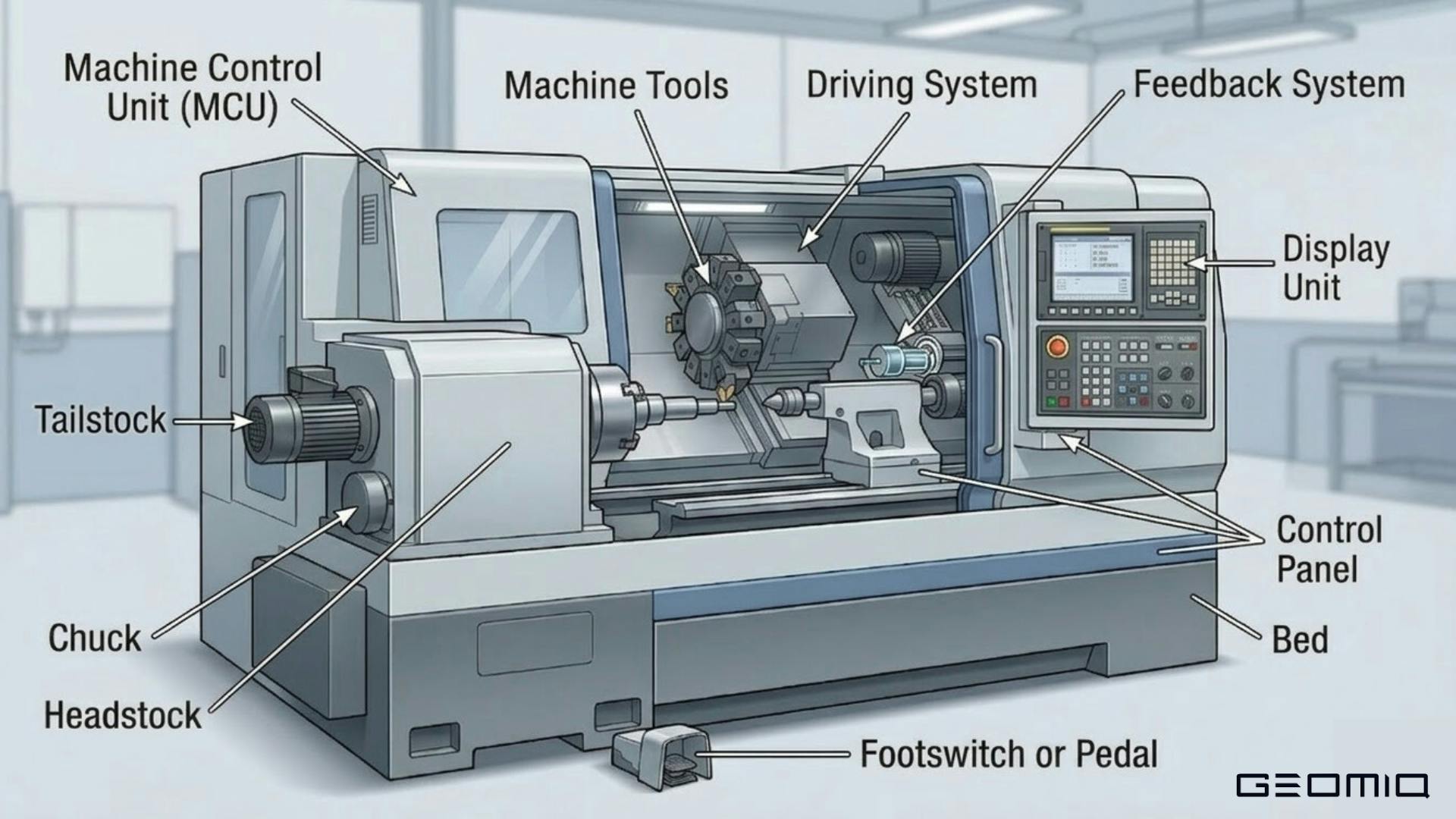
The key components of a CNC machine work together to ensure precision and efficiency in the manufacturing process. From the Machine Control Unit (MCU) that drives the machine's operations to the various machine tools that shape the material, each part plays a crucial role. Understanding these components is essential for optimising the production of CNC machined parts, whether for rapid prototyping or large-scale manufacturing. In this section, we’ll explore these core elements and how they contribute to the high performance and accuracy of CNC machines.
Machine Control Unit (MCU)
The Machine Control Unit (MCU) is the brain of the CNC machine, responsible for interpreting and executing the programmed instructions. It controls the movements of the machine tools, ensuring precise machining. The MCU is crucial for transforming digital designs into real-world CNC machined parts, making it an essential component for achieving high-quality results.
Machine Tools
Machine tools are the components that physically interact with the material, such as drills, mills, lathes, and grinders. They perform various functions like cutting, shaping, or drilling, depending on the type of CNC machine. These tools are essential for creating the specific CNC parts and complex shapes needed in manufacturing.
Driving System
The driving system consists of motors and drives that provide the movement necessary for the CNC machine to function. It ensures the machine’s axes move smoothly and accurately during the machining process. Without a reliable driving system, precision in CNC machining would be compromised, making it a vital part for achieving high-performance CNC machined parts.
Feedback System
The feedback system continuously monitors the machine’s performance, providing real-time data on the position and speed of each axis. It ensures that the machine is executing the correct movements with accuracy. This system is essential for maintaining consistency in CNC machined parts and preventing errors in the machining process.
Display Unit
The display unit provides the operator with a visual interface to monitor and control the CNC machine. It shows key information such as tool settings, operational status, and current position, allowing operators to make adjustments as needed. A user-friendly display is crucial for efficiency and reducing the risk of human error in CNC machining.
Bed
The bed is the foundation of the CNC machine, supporting both the workpiece and the machine tools. It ensures that the machine remains stable during operations, preventing vibrations that could affect precision. A well-maintained bed is crucial for accurate and high-quality CNC milling parts and other machined components.
Headstock
The headstock is a critical component that houses the main spindle and often includes the motor. It is responsible for holding and rotating the workpiece during the machining process. The headstock is vital for ensuring that CNC parts are cut and shaped with high precision, particularly in turning operations.
Tailstock
The tailstock is positioned opposite the headstock and provides additional support to the workpiece during machining. It is often used to hold tools for drilling or to stabilise longer parts. By ensuring the workpiece is properly aligned and supported, the tailstock plays an important role in creating high-quality CNC machined parts.
Tailstock Quill
The tailstock quill is an adjustable part of the tailstock that moves in and out to secure tools or the workpiece. It is commonly used in turning operations to provide further stability. The quill's precision ensures that tools remain aligned, making it an essential part of achieving accurate CNC machined parts. Learn more in our CNC Machining Guide.
Footswitch or Pedal
The footswitch or pedal allows the operator to control certain aspects of the CNC machine without needing to use their hands. It can be used to initiate operations, stop the machine, or activate the tool changer. This hands-free control improves efficiency and safety during CNC machining, especially in fast-paced environments.
Chuck
The chuck is a clamping device that holds the workpiece securely in place during machining. It is essential for CNC machines that perform turning or milling operations, ensuring the workpiece remains stable throughout the process. A reliable chuck is critical for producing precise CNC machining parts.
Control Panel
The control panel is the operator's interface for setting up, controlling, and adjusting the CNC machine’s operations. It typically includes buttons, switches, and a digital display to input commands and monitor machine status. The control panel is vital for effective machine operation, allowing operators to manage CNC milling parts and other processes efficiently.
Types of CNC Machines
CNC machines come in various types, each designed for specific tasks in the manufacturing process. Whether you're looking to create complex parts with precision or streamline production, choosing the right type of CNC machine is essential. The three most common types are CNC milling, CNC turning, and CNC routers. Each machine serves a unique purpose in shaping, cutting, or machining materials to meet the needs of your project.
CNC Milling
CNC milling machines are used to remove material from a workpiece using rotary cutters. They are ideal for creating intricate parts with high precision, whether you're machining metals, plastics, or composites. CNC milling is particularly useful for producing parts that require detailed surface finishes or complex geometries. It's a versatile and commonly used type of CNC machine in manufacturing.
CNC Turning
CNC turning machines are primarily used for shaping cylindrical parts. The workpiece is rotated while a cutting tool is applied to remove material. CNC turning is ideal for creating round parts, such as shafts, pins, and bushings. This machine type is known for its efficiency in producing symmetrical and high-precision cylindrical CNC machined parts.
CNC Routers
CNC routers are designed to cut, carve, or engrave materials like wood, plastics, and softer metals. They are commonly used in industries such as woodworking, signage, and aerospace. CNC routers offer high-speed cutting with less material waste, making them an excellent choice for both prototyping and mass production of components with large surface areas.
Conclusion
CNC machines are crucial for modern manufacturing, offering precision, efficiency, and versatility across various industries. By understanding the key components and their roles, manufacturers can optimise their operations and achieve consistent, high-quality CNC machined parts.
Whether you’re focusing on rapid prototyping or large-scale production, selecting the right CNC machine and components is essential. For further guidance on maximising your CNC machining process․
About the author
Sam Al-Mukhtar
Mechanical Engineer, Founder and CEO of Geomiq
Mechanical Engineer, Founder and CEO of Geomiq, an online manufacturing platform for CNC Machining, 3D Printing, Injection Moulding and Sheet Metal fabrication. Our mission is to automate custom manufacturing, to deliver industry-leading service levels that enable engineers to innovate faster.