Understanding Metric Threads in CNC Machining and Precision Manufacturing
Metric threads, represented by symbols like M16 or M20, are a standardized form of threading commonly used in precision manufacturing. The "M" designation indicates a metric thread, while the number refers to the thread's nominal diameter in millimeters. Metric threads are widely adopted in CNC machining and engineering design for their consistent dimensions by making sure compatibility across a wide range of applications.
In industries like aerospace, automotive, medical and industrial sectors, metric threads play a crucial role in making sure the proper fit, function and durability of components. Their use in CNC machining allows manufacturers to produce high-precision parts, meeting international standards and specific engineering requirements.
Why Metric Threads Matter in CNC Machining
Metric threads play a critical role in CNC machining due to their ability to provide consistent, reliable and precise connections between parts. In industries where high-performance standards are essential, such as aerospace, automotive and medical device manufacturing, using standardized metric threads ensures compatibility, strength and seamless integration across different components and systems. These threads are not only integral for mechanical performance but also for maintaining the interchangeability of parts sourced from various global suppliers. Below, we explore why metric threads are indispensable in CNC machining and how they support precision and global standardization.
International Standardization (ISO)
One of the key reasons metric threads are widely used in CNC machining is their adherence to international standards, particularly those set by the International Organization for Standardization. ISO metric threads are designed to make sure uniformity, simplifying the design and manufacturing process. This consistency is vital for engineers and manufacturers working across global supply chains, as it guarantees that threaded parts will fit and function correctly across different manufacturers and industries.
Precision, Tolerances and Fitment
Precision is dominant in CNC machining, and metric threads help achieve it. CNC machines are capable of achieving tight tolerances, ensuring that parts with metric threads fit together. By adhering to standardized dimensions, metric threads help reduce errors and variability, resulting in higher quality and performance of manufactured components.
Compatibility and Part Interoperability
Metric threads are used globally, which makes them ideal for applications where parts need to be interchangeable or compatible across different regions or manufacturers. For example, in industries like aerospace and automotive, components may need to be sourced from various global suppliers, making standardized threading essential to maintain consistency and interoperability.
Types of Metric Threads
Coarse Metric Threads
Coarse metric threads use the M designation with only the nominal diameter (e.g., M10), where the standard coarse pitch is implied and not written. They are typically used in applications where strength and durability are critical, such as in mechanical fastening.
Features
Coarse threads (M) are commonly used in applications where strength, durability and ease of manufacturing are essential. They offer several advantages that make them ideal for heavy-duty and high-stress environments:
- Easier to manufacture and cost-effective
- Stronger due to the larger thread engagement area
- More resistant to damage from vibrations and rough handling
Common CNC Use Cases
Coarse threads (M) are frequently used in applications where components must withstand heavy loads, vibrations and wear. Some common CNC use cases for coarse threads include:
- Automotive fasteners (e.g. engine components)
- Structural elements in manufacturing
- Heavy-duty machinery
Fine Metric Threads
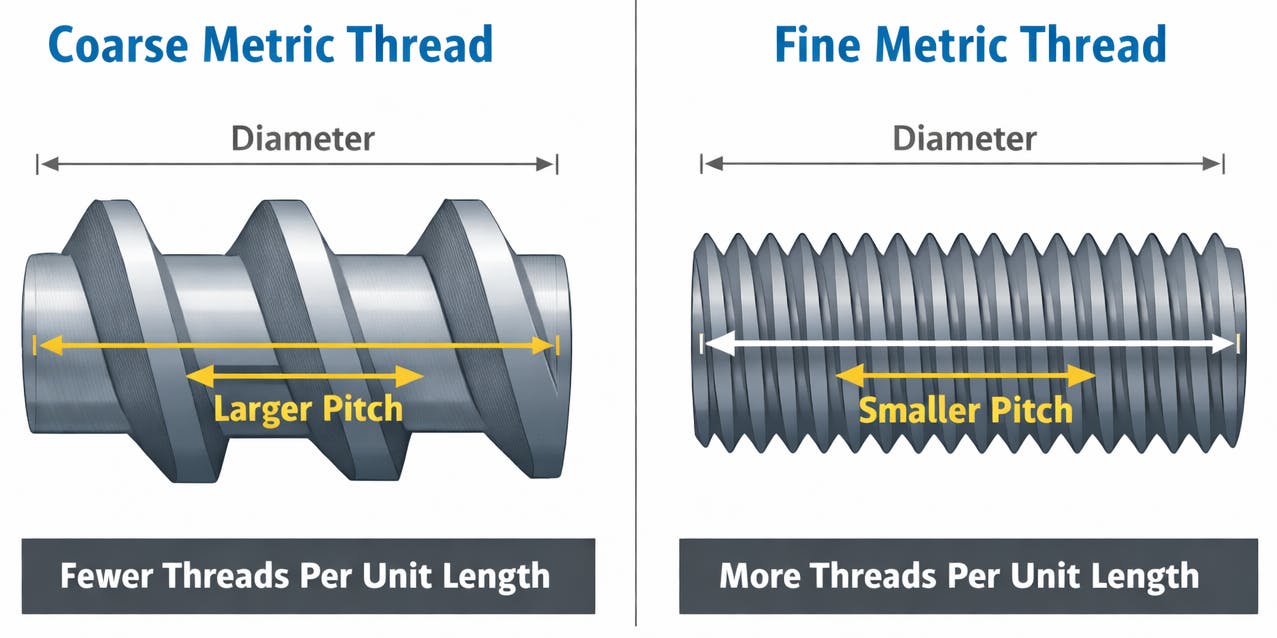
Fine metric threads have a smaller pitch, resulting in more threads per unit length, and are designated as M followed by diameter and pitch (e.g. M10×1.0). These threads are commonly used in applications where higher precision is required.
Advantages
Fine threads are known for their precision and ability to handle high-torque applications. They offer several key benefits that make them ideal for industries requiring exact fitments and performance:
- Better torque resistance
- More precise, providing a finer fit for components
- Preferred for applications that require a higher level of adjustment and finer tolerance
Common CNC Use Cases
Fine threads are particularly valuable in applications where high precision and tight tolerances are critical. Some of the common CNC use cases include:
- Aerospace components requiring high torque resistance
- Medical devices where fine tolerances are essential
- Small mechanical parts that demand tight fitment
Diagram of Coarse and Fine Metric Threads
This diagram compares coarse and fine metric threads side by side, showing the difference in pitch size and thread density. On the left, the coarse thread is shown with fewer, larger threads, while the fine thread on the right highlights smaller, more numerous threads. The key labels indicate their respective pitch size and thread density.
Coarse vs Fine Threads Comparison
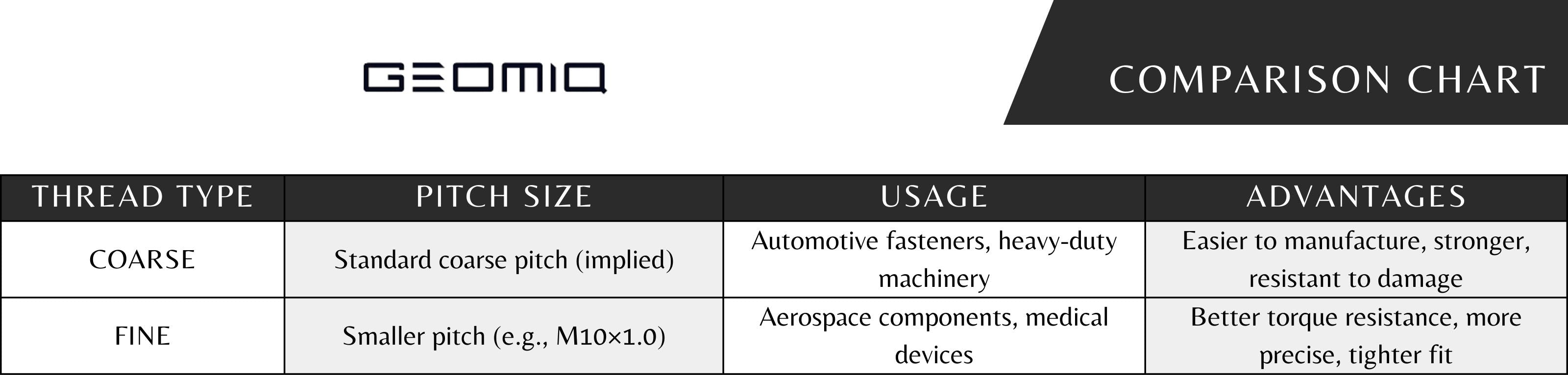
To better understand the differences between coarse and fine metric threads, the following table compares key characteristics, including pitch size, usage and advantages, for each type of thread.
Special Threads
Special threads are custom or variable pitch threads tailored for specific applications, including left-hand threads. These threads are often used in industries that require non-standard configurations, such as reverse or specialized torque applications.
Examples
Special threads are often used in applications that require specific functional properties or configurations. These threads are designed to meet unique needs in various industries:
- Left-hand threads used in applications where components must be screwed in the opposite direction
- Variable pitch threads designed to reduce vibration or accommodate specific loading conditions
How to Choose the Right Metric Thread for Your CNC Machined Parts
When choosing the right metric thread for CNC machined parts, several factors need to be considered:
Coarse vs Fine Thread Selection Criteria
When selecting between coarse and fine threads, the primary consideration is the balance between strength and precision. The choice largely depends on the specific requirements of the application:
- Coarse Threads are ideal when durability, strength, and ease of manufacturing are top priorities.
- Fine Threads should be chosen when precision, high-torque applications, or minimal vibration are required.
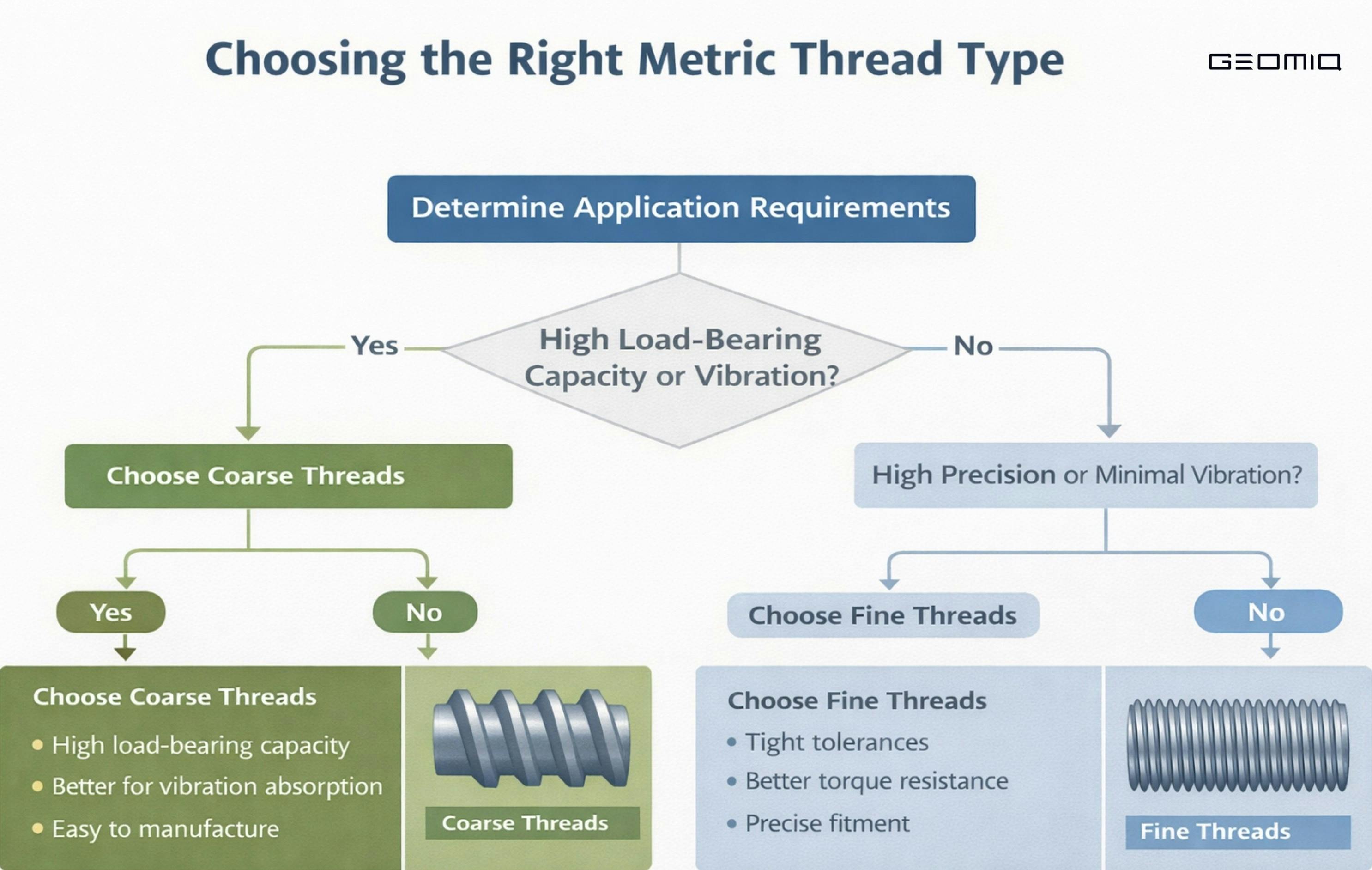
The flowchart below helps guide the decision-making process for choosing between coarse and fine metric threads based on application requirements. It simplifies the selection process by focusing on key factors such as load-bearing capacity, vibration, precision and application needs. Use the flowchart to determine whether coarse or fine threads are best suited for your specific CNC machined parts, ensuring optimal performance, durability and fitment.
Thread Size and Pitch vs Load, Vibration and Application Needs
The size and pitch of the thread significantly influence how well the component will perform under stress. When determining the best thread type, it's crucial to consider factors such as load-bearing capacity and vibration:
- Load-bearing components (e.g. structural parts) benefit from coarse threads, which provide better resistance to wear and damage.
- High-precision applications, such as aerospace fasteners, may require fine threads to ensure an accurate fit and reliable performance.
Practical Example: Aerospace Fastener Selection
In the aerospace industry, fasteners used for aircraft engine assembly often employ fine threads (MF) to handle high stresses while maintaining precise engagement. Coarse threads, however, might be used in larger structural components where the load and stress are more evenly distributed.
Applications of Metric Threads in CNC Machining
Metric threads are used across various industries. Below are some key applications where their use ensures strength, precision, and reliability:
- Automotive - Used in fasteners, engine components, and structural parts for critical applications like suspension systems, chassis, and fuel systems.
- Aerospace and Military - Used in engine parts, airframe structures, and defense systems to ensure performance under high-stress conditions. In industries like aerospace, CNC machining in aerospace, metric threads are used in components to handle high-stress conditions while ensuring reliability and precision.
- Medical Device Manufacturing - Used in surgical instruments, implants, and prosthetics for precise fitment and performance.
- Consumer and Industrial Products - Applied in machine tools, household appliances, and other durable components requiring precision.
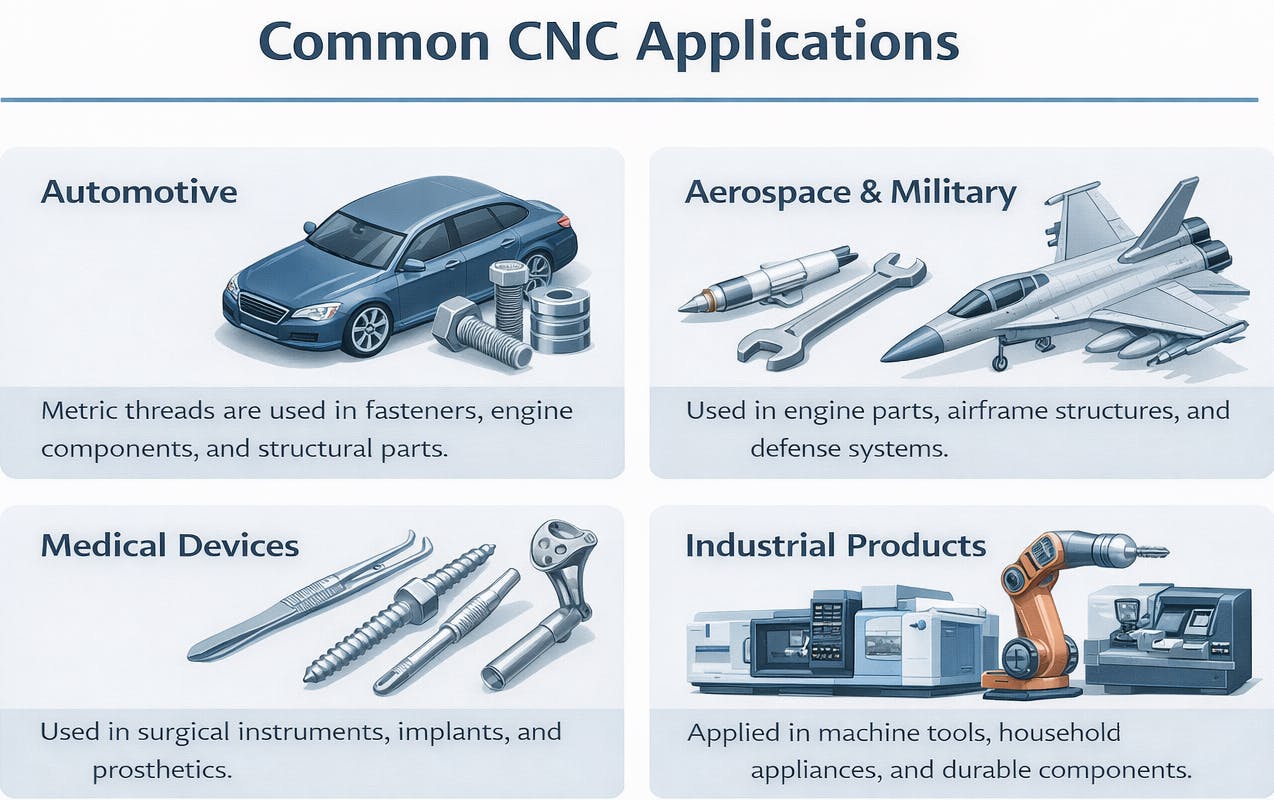
The infographic below illustrates the key industries where metric threads are widely used in CNC machining. It provides a visual overview of how metric threads are applied across automotive, aerospace & military, medical devices, and industrial products, highlighting the benefits they bring in each sector, from durability and precision to performance under high-stress conditions.
Advantages of Metric Threads in CNC Machining
Metric threads offer many advantages in CNC machining, making them a preferred choice for high-precision and high-performance applications. Their standardized design and exceptional manufacturing consistency provide significant benefits in terms of fitment, durability and ease of production. Whether it's for aerospace, automotive or medical device manufacturing, metric threads help ensure that components meet the required specifications for strength, precision and reliability, all while streamlining the production process. For businesses looking to produce high-quality parts with metric threads, online CNC machining services offer a range of solutions.
Fitment and Precision
Metric threads offer exceptional precision in CNC machining, ensuring components fit together. This is particularly crucial in applications like medical devices and aerospace, where even slight variations can lead to performance issues.
Durability and Mechanical Strength
Due to their standardized design and robust manufacturing, metric threads provide exceptional mechanical strength. This makes them ideal for applications that require resistance to wear, corrosion and high torque.
Ease of High-Volume CNC Manufacturing
Metric threads are relatively easy to manufacture in high volumes using CNC machining, making them cost-effective for large-scale production. Standardized designs also streamline the supply chain and reduce the likelihood of errors.
CNC Machining and Metric Threading: The Process
Creating metric threads in CNC machining involves a series of precise techniques and tools, ensuring that components meet exact specifications for various industries. These processes are crucial for achieving the high level of precision and durability required in sectors such as aerospace, automotive and medical device manufacturing. Below, we explore the methods, tools, challenges and advanced techniques involved in metric threading within CNC machining.
Overview of CNC Threading Methods
CNC machines use various techniques for creating metric threads, including:
- Turning - A common method for producing external threads on cylindrical parts. For producing external threads on cylindrical parts, CNC turning is one of the most effective methods used.
- Milling - Used for creating threads in slots or other complex geometries. When complex geometries are required, CNC milling becomes essential in creating precise metric threads in various parts.
- Tapping - Used for creating internal threads in holes.
Tools Used for Metric Threading
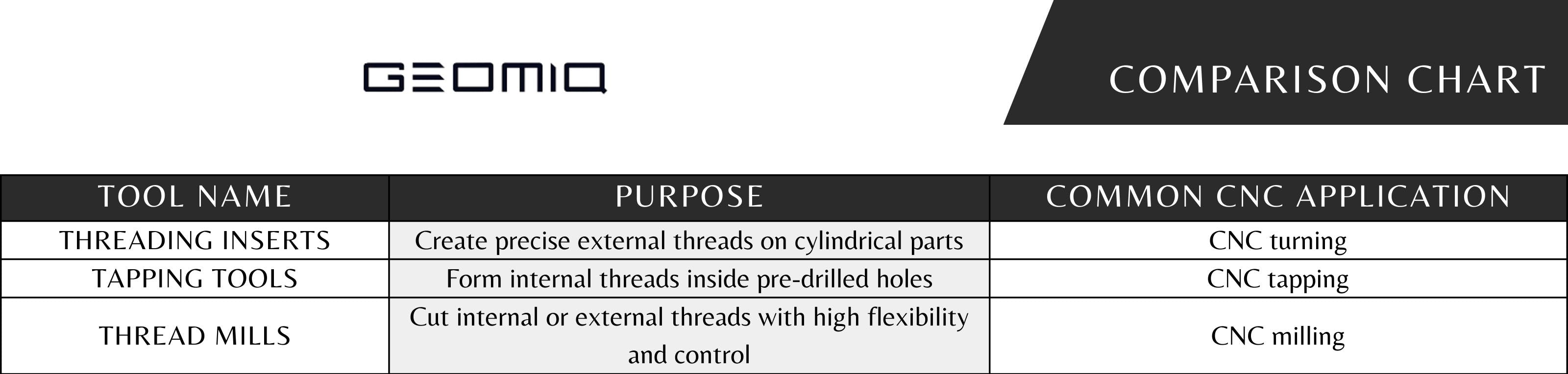
Metric threading in CNC machining relies on specialized tools designed for accuracy, repeatability and material-specific performance. The table below provides a quick overview of the most commonly used CNC threading tools, their purpose and where they are typically applied.
Common Challenges and Solutions
While CNC machining enables highly accurate metric threading, certain challenges can arise depending on material properties, tooling and process parameters. Understanding these common issues and how to address them helps ensure consistent thread quality, surface finish and long-term part performance.
- Surface Finish - Achieving a smooth thread surface can be challenging, particularly in hard materials. Solutions include using coolant to reduce heat and wear, as well as optimizing cutting speeds and tool geometry.
- Material Hardness - Harder materials may require specialized tools or coatings to achieve the desired thread quality.
Advanced Techniques
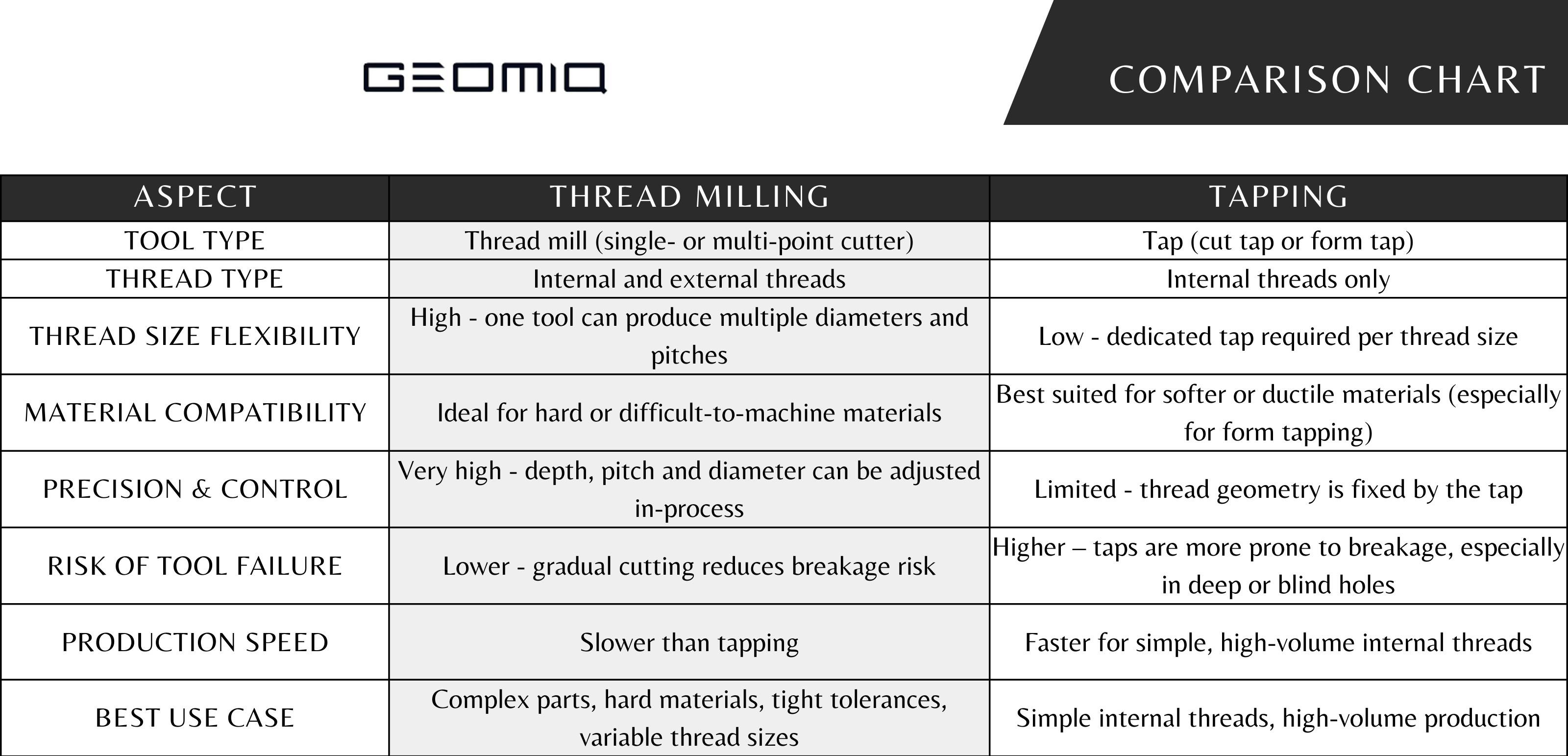
Advanced CNC threading techniques allow manufacturers to balance speed, flexibility, and precision depending on part geometry, material, and production volume. The table below compares thread milling and tapping, helping clarify when each method is best suited for metric threading in CNC machining.
Conclusion: How Metric Threads Drive Precision in CNC Machining
Metric threads form the foundation of precision CNC machining, providing standardized, durable and high-performance threading solutions across various industries. Their versatility and ability to meet international standards make them essential in the production of high-quality components for aerospace, automotive, medical and industrial sectors.
Whether you're designing fasteners for an aerospace application or a critical medical device, selecting the right metric thread can ensure optimal performance, fitment and reliability.
For businesses seeking precision CNC machining with metric threads, Geomiq provides cutting-edge solutions and expertise in delivering high-quality, custom-manufactured parts. Contact us today for more information.
About the author
Sam Al-Mukhtar
Mechanical Engineer, Founder and CEO of Geomiq
Mechanical Engineer, Founder and CEO of Geomiq, an online manufacturing platform for CNC Machining, 3D Printing, Injection Moulding and Sheet Metal fabrication. Our mission is to automate custom manufacturing, to deliver industry-leading service levels that enable engineers to innovate faster.