Copper in CNC Machining
What is Copper? Key Physical Characteristics
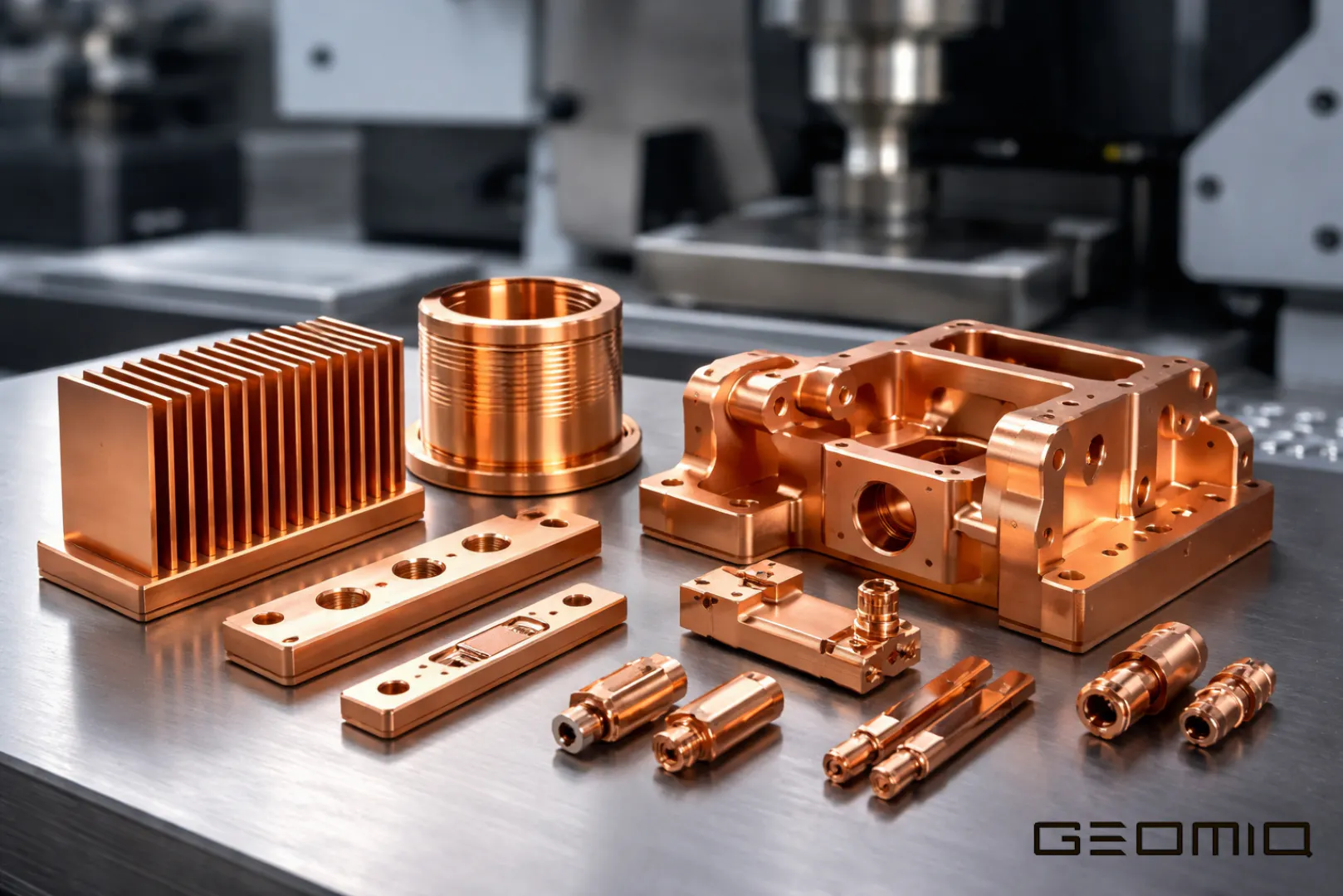
Copper is a non-ferrous metal known for its excellent conductivity and versatility. So, what is copper? It’s a naturally occurring metal that’s easy to shape and widely used in industries. Is copper a metal? Yes, it’s a soft, ductile metal ideal for various applications.
Copper’s main properties include high electrical and thermal conductivity, corrosion resistance, and good machinability. With a density of 8.96 g/cm³, it is durable and stable. Copper is used for electrical wiring, heat exchangers, and industrial components. While copper cost and copper price per kg can vary, it’s an essential material for many projects, including rapid prototyping services.
Why Copper is Used in CNC Machining
Copper is widely used in CNC machining because it is easy to work with and delivers reliable results. Its softness allows tools to cut smoothly, reducing wear and improving precision. This makes it a practical choice for producing detailed components with consistent quality.
One of the main properties of copper is its excellent electrical and thermal conductivity, which is why it is often used in electronic and heat-related applications. It also resists corrosion, helping parts last longer in demanding environments. When considering copper and uses, it is commonly chosen for connectors, heat sinks, and custom-machined components where performance matters.
Types of Copper Used in CNC Machining
Pure Copper (Oxygen-Free Copper)
This is a very pure form of copper with excellent electrical and thermal conductivity. It’s often used in high-performance applications where even small impurities can affect results.
Electrolytic Tough Pitch (ETP Copper)
ETP copper is one of the most common types used in machining. It offers good conductivity, is easy to source, and works well for general-purpose parts.
Free-Machining Copper Alloys
These are specially modified copper materials that are easier to machine. They allow smoother cutting, better finishes, and help reduce tool wear.
Copper Alloys (Brass, Bronze – CNC applications)
Brass and bronze are copper-based alloys that are stronger and easier to machine than pure copper. They are often used for parts that need durability and long-term performance.
Copper 101
Copper 101 is a high-purity grade known for its excellent conductivity. It’s commonly used in electrical components and precision parts.

Copper C110
Copper C110 is widely used because it offers high conductivity at a more practical cost. It’s a reliable option for many CNC machining applications.

CNC Machining Properties of Copper
Copper is widely used in CNC machining because it conducts heat and electricity very well. It also resists corrosion and helps produce precise, high-quality parts. However, copper is a soft material. This can make it harder to machine cleanly without the right tools.Understanding the key properties of copper helps manufacturers improve cutting and get more consistent results.
Advantages of Copper in CNC Machining
Copper offers clear advantages in CNC machining, especially when performance and reliability matter. It is easy to work with and delivers consistent results. This makes it a popular choice across many industries.
High Electrical Conductivity Applications
Copper is one of the best materials for conducting electricity. It is commonly used in connectors, wiring, and electronic components. This ensures stable and efficient performance.
Excellent Thermal Performance
Copper moves heat quickly, which helps keep systems cool. It is often used in heat sinks and cooling parts. This improves efficiency and prevents overheating.
Precision and Finish Quality
Copper allows for accurate machining, even for small or detailed parts. With the right tools, it can achieve a smooth surface finish. This makes it suitable for both functional and visual components.
Applications of CNC Machined Copper Parts
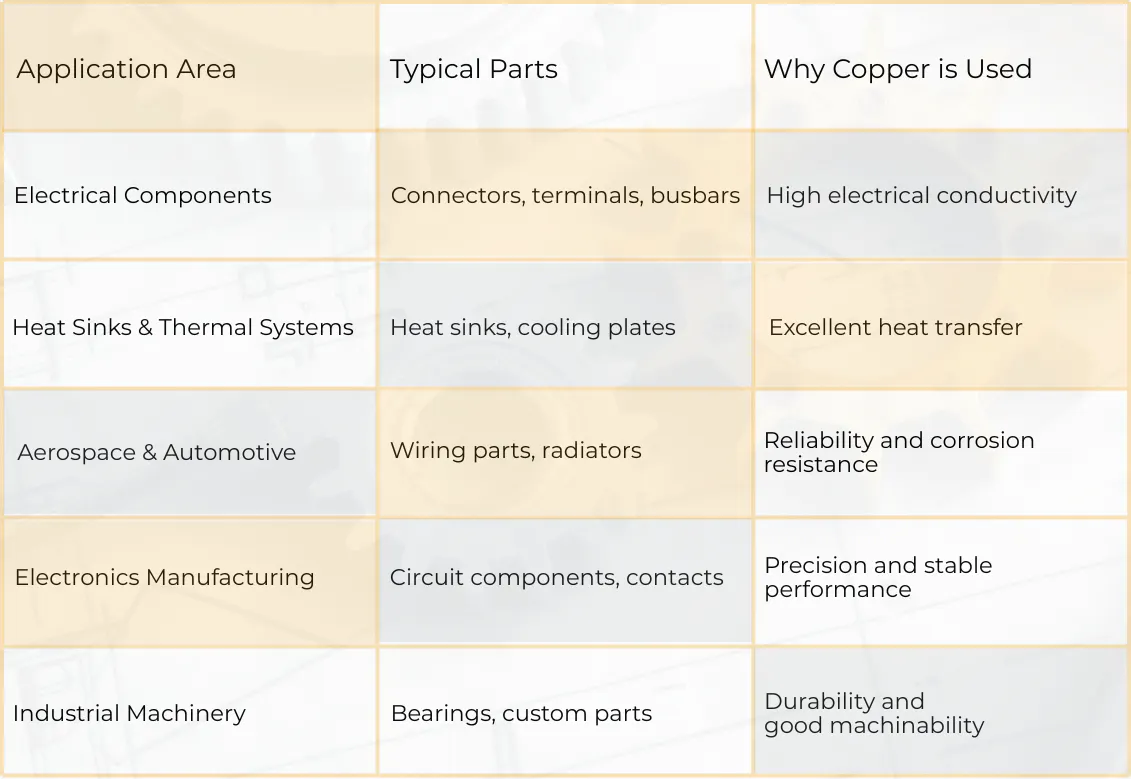
CNC machined copper parts are used in many industries where performance and reliability are important. Thanks to its conductivity and durability, copper works well in both electrical and thermal applications. Below is a quick overview of the most common uses and why copper is chosen for them.
- Electrical Components
- Heat Sinks & Thermal Systems
- Aerospace & Automotive
- Electronics Manufacturing
- Industrial Machinery
Copper vs Other Metals in CNC Machining
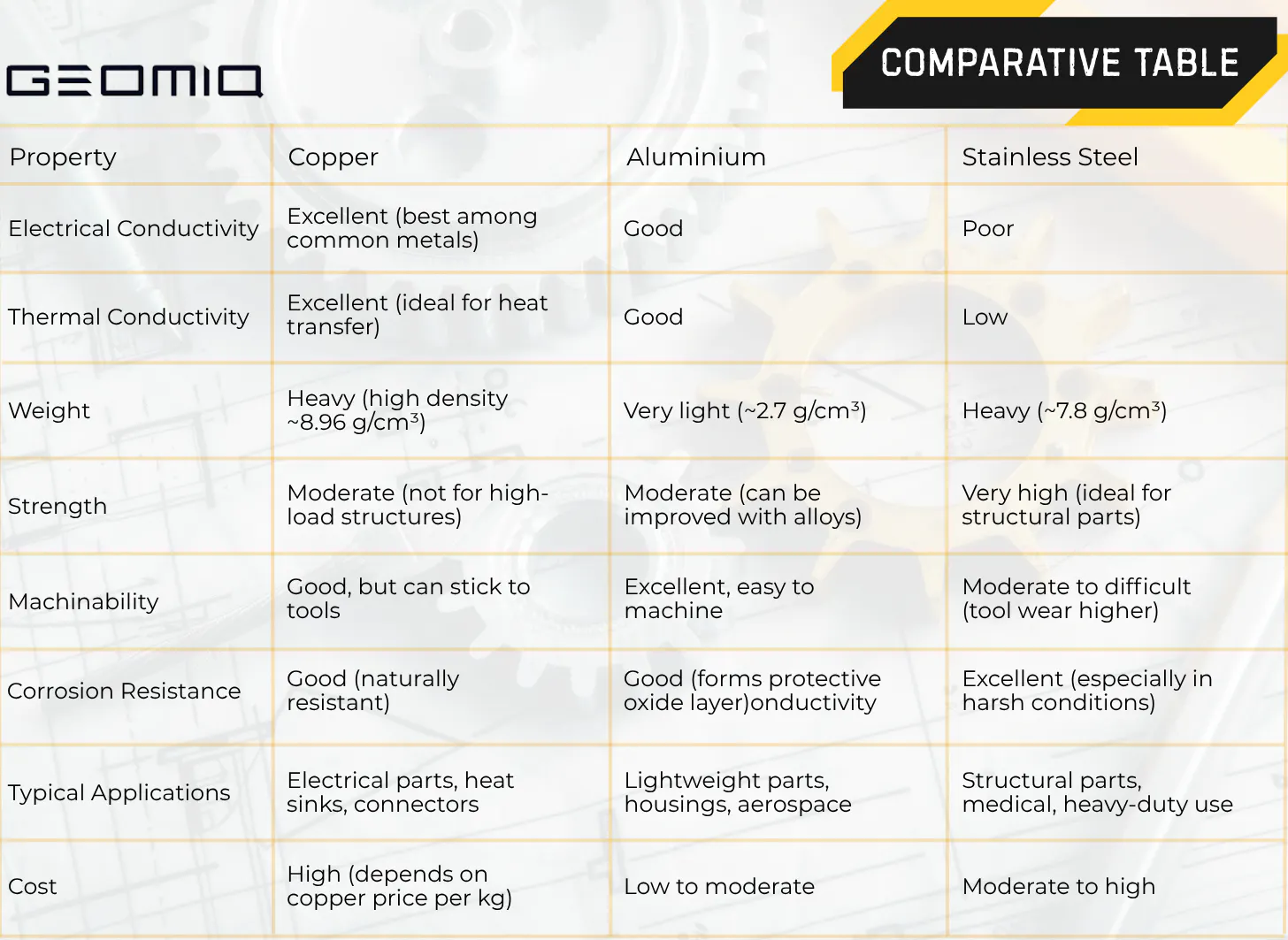
Copper is often compared with other metals based on conductivity, strength, and machinability. While it performs exceptionally well in electrical and thermal applications, it may not always be the most cost-effective or easiest material to machine. Choosing the right metal depends on the specific requirements of the part.
Copper vs Aluminum
Copper offers much higher electrical and thermal conductivity than aluminium. However, aluminium is lighter, easier to machine, and usually more cost-effective.
Copper vs Stainless Steel
Copper provides better conductivity, while stainless steel is stronger and more resistant to wear. Stainless steel is preferred for structural parts, while copper is used for performance-focused applications.
When to Choose Copper Over Other Metals
Choose copper when conductivity and heat transfer are critical. It is ideal for electrical components, cooling systems, and precision parts where performance matters more than cost or weight.
Next Steps with Geomiq
If you’re designing parts that must withstand real-world mechanical loads, Geomiq can support you with:
- Material selection guidance
- Precision manufacturing services
- Engineering-ready production at scale
Explore Geomiq’s manufacturing solutions or request a quote to bring your designs to life.
FAQ
Why is copper commonly used in CNC machining?
What are the main challenges when machining copper?
Can copper be used in high-precision applications?
What are the different types of copper used in CNC machining?
How can copper be protected after machining?
About the author
Sam Al-Mukhtar
Mechanical Engineer, Founder and CEO of Geomiq
Mechanical Engineer, Founder and CEO of Geomiq, an online manufacturing platform for CNC Machining, 3D Printing, Injection Moulding and Sheet Metal fabrication. Our mission is to automate custom manufacturing, to deliver industry-leading service levels that enable engineers to innovate faster.