CNC Machining in the Medical Industry
CNC machining plays a critical role in modern medical manufacturing, enabling the production of highly precise, reliable, and biocompatible components used in surgical tools, implants, and diagnostic equipment. Its ability to convert digital designs into functional medical-grade parts has made it a core technology in healthcare innovation.
What Is Medical CNC Machining?
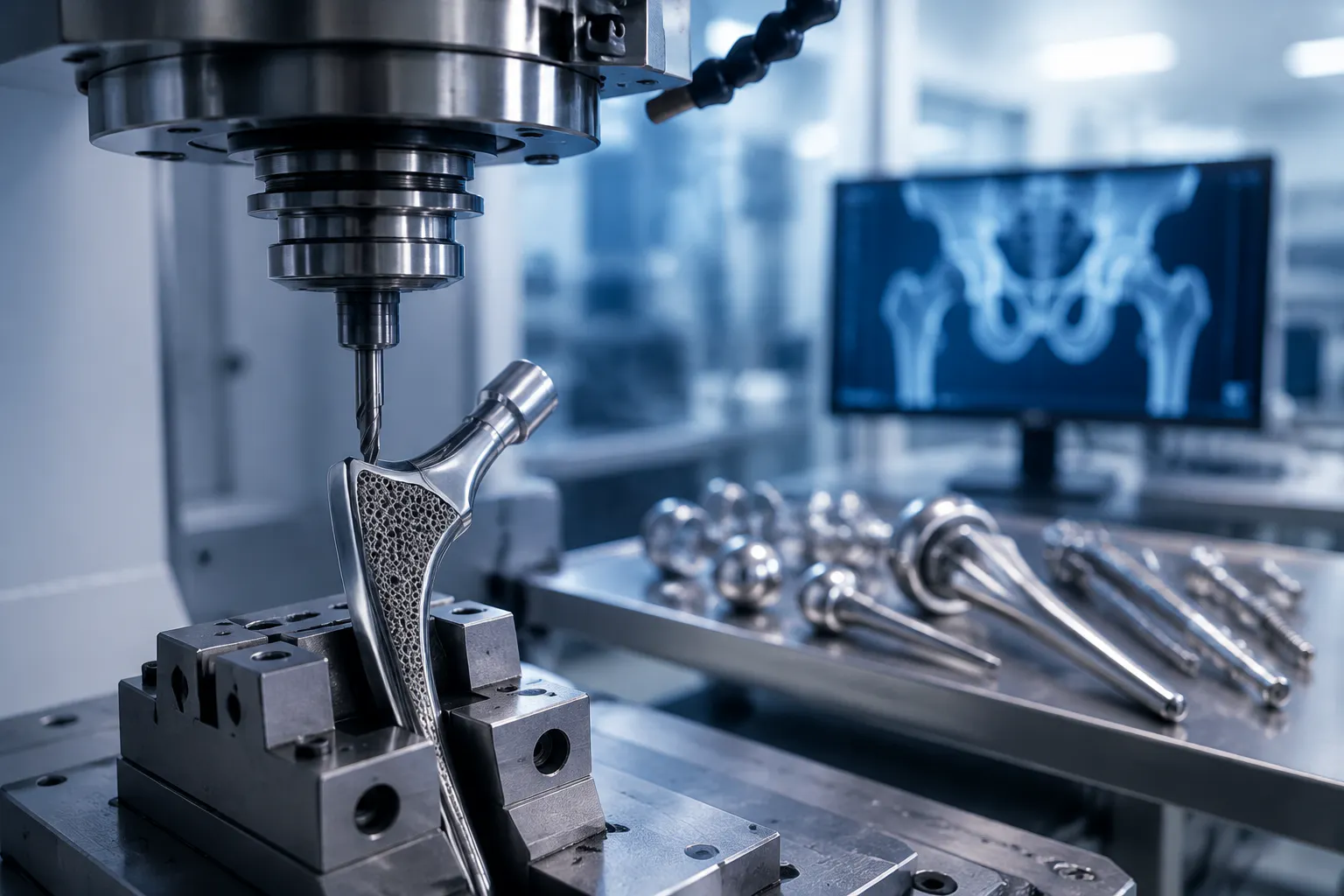
Medical CNC machining refers to the use of computer-controlled manufacturing systems to produce medical components with extremely high precision. It is widely used for manufacturing implants, surgical instruments, and diagnostic device components where accuracy and repeatability are critical.
This process transforms CAD designs into physical parts using automated milling, turning, and drilling operations. It ensures tight tolerances, consistent quality, and material compatibility required in the medical industry.
How CNC Machining Is Used in Medical Manufacturing
CNC machining is widely used across the medical sector to produce both standard and patient-specific components. It supports high-volume manufacturing as well as highly customised device production.
Applications include orthopedic implants, surgical instruments, dental components, and housing parts for diagnostic machines. Its precision ensures that every component meets strict safety and performance requirements.
Types of CNC Machines Used in the Medical Industry
Medical manufacturing uses several CNC machine types depending on complexity, material, and precision requirements. Each machine type plays a specific role in producing medical-grade components.
CNC Milling Machines
Used for complex geometries like implants and bone plates. CNC Milling Machines offer multi-axis movement for high precision shaping.
CNC Turning Machines
Ideal for cylindrical parts such as screws, pins, and connectors used in surgical systems.
5-Axis CNC Machines
5-Axis CNC Machines used for highly complex medical implants where multiple angles and surfaces must be machined in a single setup.
Micro CNC Machines
Designed for extremely small and delicate components such as dental and micro-surgical parts.
Comparison table: CNC Machine Types in Medical Manufacturing
| Machine Type | Best Used For | Precision Level | Typical Medical Application |
|---|---|---|---|
| Milling | Complex shapes | High | Implants, plates |
| Turning | Round parts | High | Screws, pins |
| 5-axis | Complex geometries | Very High | Orthopedic implants |
| Micro CNC | Tiny components | Ultra High | Dental tools |
Materials Used in Medical CNC Machining (Metals)
Medical CNC machining relies heavily on high-performance metals that can withstand sterilisation, mechanical stress, and long-term use inside or on the human body. These materials are selected based on strength, corrosion resistance, and biocompatibility.
Common metals used in medical CNC machining
- Titanium (Ti-6Al-4V) – widely used in implants due to excellent biocompatibility
- Stainless Steel (316L) – standard for surgical instruments and reusable tools
- Cobalt Chrome – high wear resistance for joint replacements
- MP35N – used in high-strength, non-magnetic medical components
These metals are essential in cnc machining medical parts where durability and safety are critical. Titanium remains the most common choice for medical device cnc machining due to its balance of strength and biological compatibility.
Metal comparison table:
| Material | Strength | Corrosion | Use |
|---|---|---|---|
| Titanium | High | Excellent | Implants |
| 316L Steel | High | Good | Surgical tools |
| Cobalt Chrome | Very High | Excellent | Joint parts |
| MP35N | High | Excellent | Precision parts |
Materials Used in Medical CNC Machining (Plastics & Polymers)
Alongside metals, advanced polymers are widely used in medical cnc machining for medical industry applications, especially where flexibility, weight reduction, and chemical resistance are required.
Common medical-grade polymers
- PEEK – high strength, used in spinal implants and structural devices
- PTFE (Teflon) – low friction, ideal for seals and catheter components
- Delrin (POM) – good wear resistance for housings and gears
- UHMW-PE – used in orthopaedic liners and joint components
These materials are widely used in cnc machining medical devices where metal is not suitable due to weight or flexibility requirements.
Polymer comparison table
| Material | Key Feature | Use |
|---|---|---|
| PEEK | High strength | Implants |
| PTFE | Low friction | Seals |
| Delrin | Wear resistant | Housings |
| UHMW-PE | Impact resistant | Joint liners |
Benefits of CNC Machining for Medical Devices
CNC machining delivers significant advantages in medical manufacturing, particularly in precision, safety, and scalability.
Precision and Accuracy
Medical components require micron-level tolerances. CNC machining ensures repeatable accuracy critical for implants and surgical tools.
Surface Finish Quality
Smooth finishes reduce infection risks and improve biocompatibility when devices interact with human tissue.
Consistency and Scalability
Once programmed, CNC machines can produce identical parts at scale without quality variation.
Regulatory Compliance
Supports ISO 13485 and FDA compliance through controlled and traceable manufacturing processes.
CNC Machining Process for Medical Parts
The CNC machining process in medical manufacturing follows a structured workflow from design to final validation.
It begins with CAD modelling, followed by toolpath programming, machining execution, finishing, and strict quality inspection. Each stage ensures the final product meets medical-grade standards.
Key stages include:
- CAD design and simulation
- Material selection (titanium, stainless steel, PEEK)
- CNC machining execution
- Surface finishing and polishing
- Inspection and validation
Comparison table: CNC Machining Process vs Traditional Manufacturing
| Stage | CNC Machining | Traditional Manufacturing |
|---|---|---|
| Design flexibility | High | Low |
| Precision | Micron-level | Variable |
| Speed | Fast prototyping | Slower setup |
| Consistency | High repeatability | Moderate |
Medical CNC Machining vs Aerospace CNC Machining
While both industries rely on high-precision CNC manufacturing, their priorities differ significantly. Medical CNC machining focuses on biocompatibility and patient safety, while aerospace prioritises structural performance and weight optimisation.
In cnc machining for medical industry, regulatory compliance and material safety are dominant factors. Aerospace, on the other hand, deals more with extreme environmental conditions such as temperature variation, pressure, and vibration resistance.
Both sectors require tight tolerances, but the acceptable material choices and certification standards differ significantly.
| Factor | Medical | Aerospace |
|---|---|---|
| Focus | Patient safety | Performance |
| Materials | Titanium, PEEK | Aluminium, Inconel |
| Tolerance | Micron-level | High precision |
| Compliance | ISO 13485 | AS9100 |
| Key Parts | Implants | Engine parts |
Regulatory Standards in Medical CNC Machining
Medical CNC machining must comply with strict global standards to ensure safety and reliability. The most important standard is ISO 13485, which governs medical device manufacturing quality systems.
Manufacturers must also maintain traceability, documentation, and quality inspection protocols throughout production. These systems ensure full compliance with regulatory requirements.
Challenges in Medical CNC Machining
Despite its advantages, medical CNC machining comes with technical and regulatory challenges.
Material selection is critical, as biocompatible materials like titanium are difficult to machine. Tight tolerances increase production complexity, and regulatory requirements add additional validation steps.
Other challenges include cost control, micro-scale machining accuracy, and maintaining consistency in high-volume production.
Future of CNC Machining in the Medical Industry
The future of medical CNC machining is driven by automation, AI integration, and hybrid manufacturing technologies.
Advancements such as Industry 4.0, robotics, and machine learning are improving precision, reducing downtime, and enabling predictive maintenance. CNC machining is also merging with 3D printing for hybrid medical manufacturing.
Personalised medicine is becoming a major driver, enabling patient-specific implants and surgical solutions.
Choosing a Medical CNC Machining Partner
Selecting the right manufacturing partner is essential for quality, compliance, and scalability in medical production.
Key factors include ISO certifications, machining capability, material expertise, and quality assurance systems. A strong partner should also offer prototyping and production scalability.
Reliable partners ensure consistent delivery of medical-grade components that meet strict regulatory requirements.
CNC Machining Services for Medical Industry at Geomiq
Geomiq provides high-precision CNC machining services tailored for the medical industry, supporting both prototyping and full-scale production.
With ISO 9001 and ISO 13485 certification, Geomiq ensures every component meets strict quality and regulatory standards. Our engineering network enables rapid production of medical-grade parts including implants, housings, and surgical components.
We support engineers and procurement teams with fast quoting, manufacturing scalability, and reliable delivery across complex medical projects.
Conclusion
CNC machining is a foundational technology in modern medical manufacturing, enabling the production of precise, safe, and highly customised medical components. As the industry evolves, CNC machining will continue to support innovation in implants, surgical tools, and patient-specific medical devices.
By combining advanced machining technology with strict regulatory compliance, manufacturers can deliver higher-quality healthcare solutions at scale.
FAQs
What is medical CNC machining?
What materials are used in medical CNC machining?
Why is CNC machining important for medical devices?
What is a CNC machine for medical use?
Is CNC machining suitable for medical implants?
What certifications are required for medical CNC machining?
About the author
Sam Al-Mukhtar
Mechanical Engineer, Founder and CEO of Geomiq
Mechanical Engineer, Founder and CEO of Geomiq, an online manufacturing platform for CNC Machining, 3D Printing, Injection Moulding and Sheet Metal fabrication. Our mission is to automate custom manufacturing, to deliver industry-leading service levels that enable engineers to innovate faster.