Aluminium CNC Machining: Alloys, Benefits & Applications
Aluminum (aluminium) is one of the go-to materials for CNC machining because it’s lightweight, easy to machine, and works across a ton of real-world parts — from brackets and housings to precision components.
In this guide, you’ll learn what aluminum is, the aluminum properties that actually affect machining, which CNC aluminium alloys to choose (like 6061 vs 7075), and practical tips on design rules, tolerances, and finishes so your cnc machined aluminium parts come out right the first time.
What is Aluminum?
Aluminum is a lightweight, silver-colored metal that’s widely used in manufacturing because it offers a strong balance of low weight, corrosion resistance, and machinability. Aluminum naturally forms a thin oxide layer when exposed to air. That layer helps protect the material from further corrosion, and finishes like anodising can strengthen that protection even more. In practice, when people say “aluminum material,” they usually mean an aluminum alloy (not pure aluminum).
Pure aluminum vs. aluminum alloys
- Pure aluminum (near 100%) is soft and very formable, good for electrical and packaging uses, but not ideal for most CNC structural parts.
- Aluminum alloys mix aluminum with elements like magnesium, silicon, copper, or zinc to increase strength, hardness, and performance for machining and engineering parts.
What Are the Characteristics of Aluminum?
Aluminum stands out because its aluminum properties give you a rare mix of low weight + good machinability + strong corrosion resistance. Here are the characteristics of aluminum that matter most when you’re designing or sourcing CNC aluminium parts:
1. Lightweight (low density)
Aluminum is naturally light, so it’s a go-to when you need to reduce weight without jumping to plastics or expensive composites. This is why it’s common for brackets, housings, frames, and moving components.
2. Strong strength-to-weight (especially in alloys)
Pure aluminum is soft, but many alloys are built to deliver high strength while staying light. For CNC, this is the main reason aluminum competes so well with steel in functional parts.
3. Very machinable (fast to cut, good finishes)
Aluminum generally machines quickly and can deliver clean surface finishes, which helps keep cycle times and costs down. It’s one of the most “shop-friendly” metals for CNC.
4. Naturally corrosion resistant
Aluminum forms a thin oxide layer that protects it in many environments. For harsher conditions (salt, humidity, wear), finishing like anodising is often the next step.
5. High thermal conductivity
It moves heat well, which is useful for heat sinks and electronics enclosures, and it can also help during machining by carrying heat away through chips.
6. High thermal expansion (important for tight tolerances)
This is a big one: aluminum expands more with temperature changes than many metals. In tight-tolerance parts, heat from machining or the working environment can slightly shift dimensions, so it’s something to design for.
7. Softer surface (can scratch / gall without a finish)
Aluminum can be prone to scratching and “galling” (material smearing) in sliding/contact areas. If the part sees friction or wear, you usually solve it with design changes, coatings, or hard anodising.
Benefits of Aluminum for CNC Machined Parts
Aluminum is popular in aluminium CNC machining for one simple reason: it gives you a lot of performance per dollar. Here are the benefits that matter most when you’re making cnc machined aluminium parts (prototypes or production).
1. Faster machining = lower cost per part
Aluminum generally cuts faster than harder metals, which means shorter cycle times, less tool wear, and often a more competitive unit cost — especially on parts with lots of milling time.
2. Great strength-to-weight ratio
For many mechanical parts, aluminum alloys deliver enough strength without the mass of steel. That’s why it’s common in weight-sensitive designs like robotics, aerospace-style assemblies, and portable equipment.
3. Good surface finishes straight off the machine
With the right tooling and parameters, aluminum can achieve clean surface finishes without heavy post-processing. That’s helpful when appearance matters (consumer products) or when surfaces need to seal properly.
4. Corrosion resistance (often without coating)
Many aluminum alloys naturally resist corrosion thanks to that oxide layer, which makes them a solid choice for parts exposed to humidity, light chemicals, or outdoor conditions. And if the environment is harsh, anodising can push that protection further.
5. Wide alloy availability for different needs
You can choose alloys based on what the part needs most:
- 6061 / 6082 for general-purpose strength + corrosion resistance
- 7075 for high strength
- 5083 for strong corrosion resistance (especially marine-style environments)
This flexibility is a big advantage compared to materials with fewer “grades that matter.”
6. Finishing options that improve performance and looks
Aluminum accepts finishes well, anodising, bead blasting, powder coating, chromate conversion, etc. That makes it easy to hit both functional and cosmetic requirements (and it helps standardize parts across product lines).
7. Good thermal conductivity for heat-related parts
If your part needs to move heat (like a heat sink, enclosure, or plate near electronics), aluminum is often the default because it transfers heat efficiently.
Best Aluminum Alloys for CNC Machining
If you’re choosing aluminum for CNC, the fastest way is to start from the job requirement (strength, corrosion, finish) and pick the alloy that matches.
- General-purpose parts (most common choice): 6061 (widely used) or 6082 (very common in the UK/EU)
- High strength / highly loaded parts: 7075 (often T6)
- High strength + good fatigue performance (aerospace-style use cases): 2024
- Best for harsh corrosion / marine-style environments: 5083
- If anodising appearance matters (clean, consistent look): 6000-series like 6061 / 6082
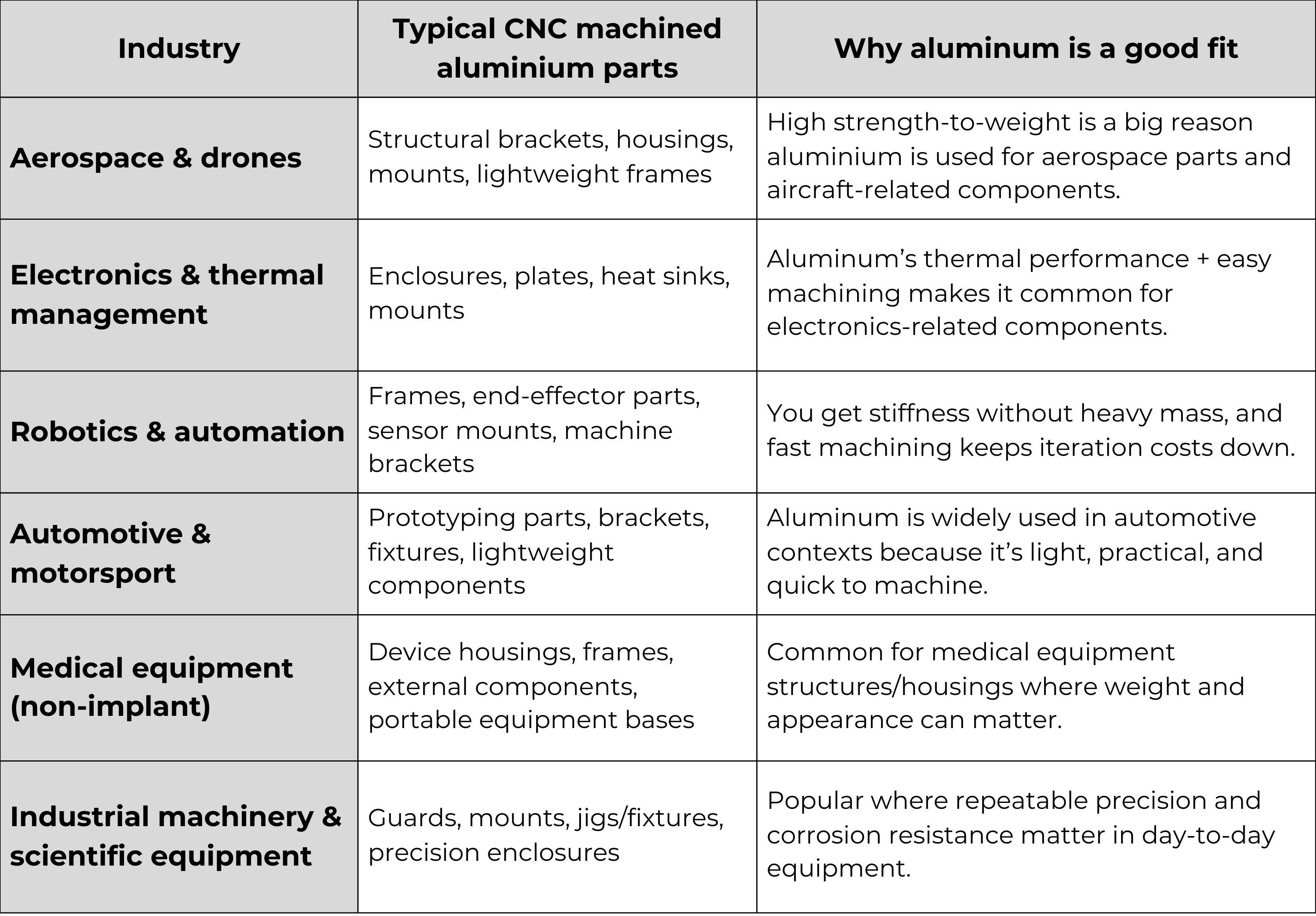
Where CNC-Machined Aluminum Parts Are Used?
Aluminum for CNC: Make the Right Call with Geomiq
Aluminum is a strong CNC choice when you need parts that are light, precise, and cost-efficient to manufacture. The real win comes from making the material decision with the end requirements in mind, load, environment, finish, and inspection needs, so your part behaves as expected in production, not just on paper.
If you’re ordering CNC machined aluminium parts, Geomiq can support you from quote to delivery, and help validate things like alloy choice, finishing implications, and manufacturability before you commit to production runs.
About the author
Sam Al-Mukhtar
Mechanical Engineer, Founder and CEO of Geomiq
Mechanical Engineer, Founder and CEO of Geomiq, an online manufacturing platform for CNC Machining, 3D Printing, Injection Moulding and Sheet Metal fabrication. Our mission is to automate custom manufacturing, to deliver industry-leading service levels that enable engineers to innovate faster.