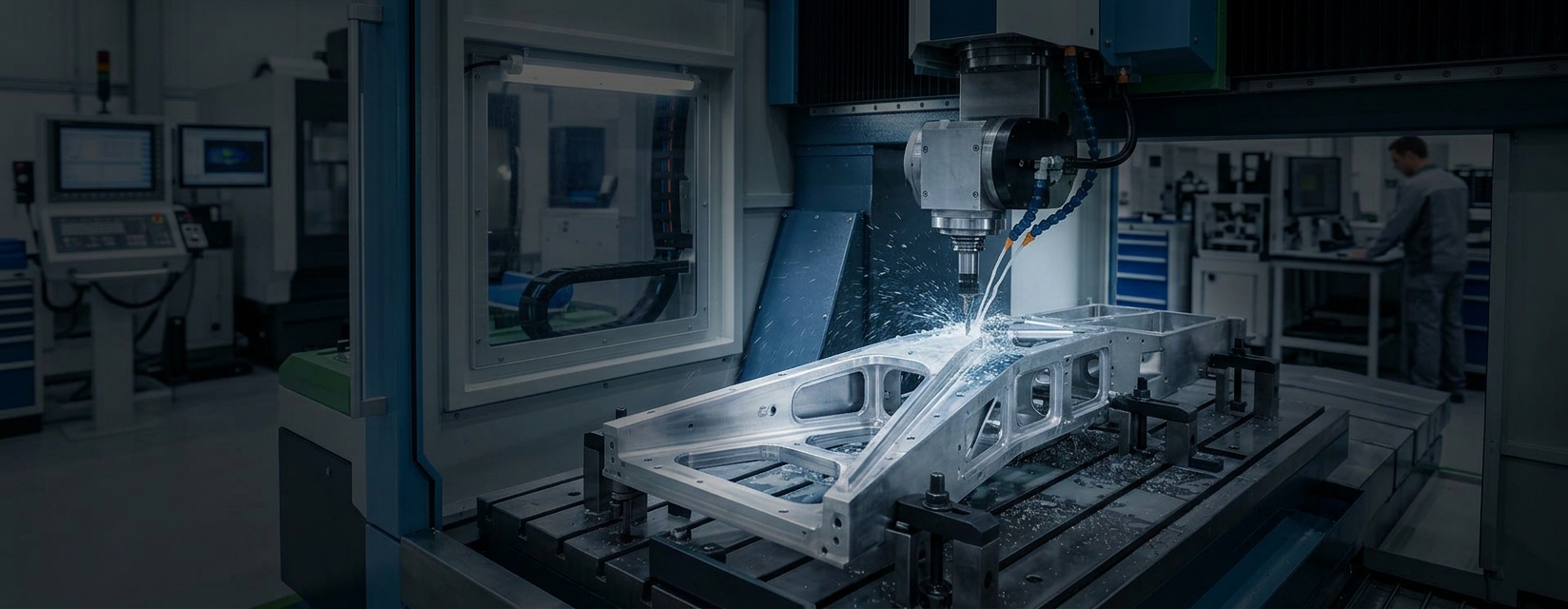
Aerospace CNC Machining Services for Precision Aircraft, Space & Defence Parts
Geomiq delivers precision CNC machined parts for the aerospace and defence industry, sourced from a vetted global network and backed by ISO 9001 and ISO 13485 quality processes, with lead times from as little as 5 days.
CNC Machining Built for the Demands of Aerospace Manufacturing
Aerospace manufacturing requires suppliers who can machine tight tolerances, work with high-performance materials, and provide full documentation and traceability on every part. Geomiq connects engineering and procurement teams with a network of specialist CNC manufacturers experienced in aerospace, defence and space components, from one-off prototypes to low-volume production. Every order goes through a controlled quality process, so parts arrive ready for inspection, assembly or flight-test use.
Key Considerations for CNC Machining in the Aerospace Industry
Aerospace-Grade Materials
Aerospace CNC machining relies on materials such as titanium Ti6Al4V, aluminium 7075 and 6061, Inconel and stainless steel, selected for strength-to-weight ratio, heat resistance and corrosion resistance. Material choice is driven directly by the part's function, whether structural, thermal or load-bearing.
Tight Tolerances & Precision
Aerospace components often require tolerances tighter than standard industrial parts, particularly on mating surfaces, bores and sealing faces. GD&T callouts and critical-to-function dimensions are used to define exactly where precision matters most.
Quality Standards & Certifications
Aerospace CNC machining is typically assessed against standards such as AS9100 and ISO 9001 for quality management systems. Documentation, inspection reports and material traceability are core requirements for supplier approval in this industry.
Flight-Critical & Structural Components
Common aerospace CNC machined parts include engine components, structural brackets, avionics housings, landing gear parts and fasteners. Each component type carries its own combination of material, tolerance and inspection requirements.
Prototyping to Low-Volume Production
CNC machining supports the full aerospace development cycle, from early-stage prototypes in production-grade materials through to low and mid-volume production runs. This makes it a practical fit for aerospace and defence programmes that rarely require the volumes associated with casting or injection moulding.
Supply Chain Resilience
Aerospace and defence programmes benefit from CNC machining suppliers with multi-sourced manufacturing capacity, reducing the risk of single-supplier bottlenecks. A vetted network of manufacturing partners also supports faster scaling as programmes move from prototype to production.
Aerospace CNC Machining Materials
Aluminium 7075-T6
Aluminium 6061
Titanium Ti6Al4V
Stainless Steel
Inconel
Engineering Plastics
Aerospace CNC Machining Processes and Quality Requirements
3-Axis CNC Milling
5-Axis CNC Machining
CNC Turning
EDM Machining
First Article Inspection (FAI)
Material Traceability & Certification
Sourcing Aerospace CNC Machined Parts Through Geomiq
Geomiq gives aerospace engineering and procurement teams access to a vetted network of CNC manufacturers capable of handling tight tolerances, exotic materials and low-to-mid volume production runs. Instead of managing multiple suppliers, teams can upload a CAD file, receive a quote within one business day, and track their part through production, inspection and delivery from a single platform. This reduces sourcing risk while keeping lead times short, which matters for both fast-moving prototyping programmes and scheduled production builds.
What Affects the Cost and Lead Time of Aerospace CNC Machined Parts?
Material Selection
Materials such as titanium and Inconel cost more to machine than aluminium because they require slower cutting speeds and specialist tooling. Choosing the right material for the part's actual function, rather than over-specifying, helps control cost.
Tolerance and Inspection Requirements
Tight tolerances, complex geometries and detailed inspection documentation such as FAI or CMM reports all add machining and quality control time. Defining tolerances only where they are functionally necessary keeps costs and lead times predictable.
Order Volume and Production Stage
Prototype and low-volume orders are priced differently from repeat production runs, since production runs benefit from process optimisation across a larger batch. Geomiq's network supports both stages, so pricing and lead time can scale as a programme moves from prototype to production.
FAQ
Does Geomiq hold AS9100 certification for aerospace parts?
Can Geomiq supply material certification and traceability documents for aerospace parts?
What is the minimum order quantity for aerospace CNC machined parts?
How long does it take to get aerospace CNC machined parts?
Can Geomiq machine titanium and Inconel parts for aerospace applications?
Is CNC machining suitable for low-volume aerospace production runs, not just prototypes?
Join us on the path to better, faster and stronger innovation
All uploads are secure and confidential.